If you’ve received “STTM” in a message, you may wonder what it means and how you should respond.
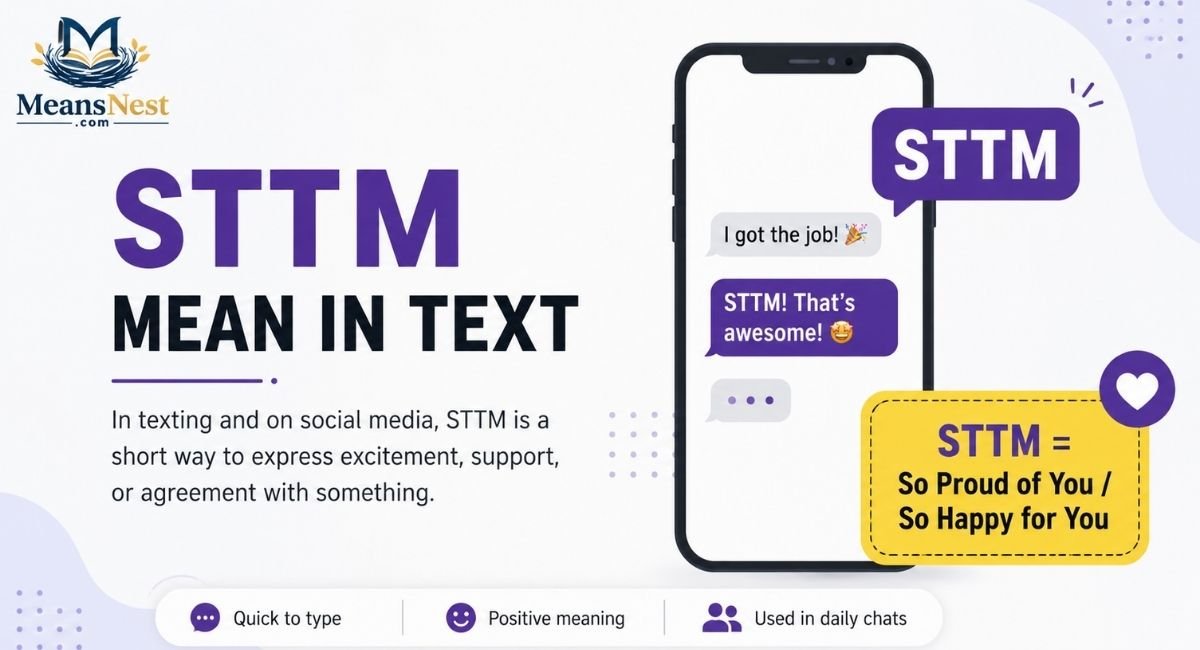
The most common STTM meaning in text is “Stop Talking To Me,” a short phrase used to end a conversation or ask someone to stop messaging.
Depending on the situation, STTM can sound serious, annoyed, playful, or sarcastic. People often use this text slang in casual chats, DMs, and social media conversations.
Understanding the texting abbreviation requires looking at the surrounding words, emojis, and the relationship between the people involved.
In some situations, STTM can also have other meanings, especially outside online communication and everyday messaging shorthand, so context is always important.
STTM Meaning and Definition
The most common STTM meaning in texting is “Stop Talking To Me.” It is an STTM abbreviation that allows someone to express the complete phrase quickly.
In simple terms, the STTM definition is a request for another person to stop talking or messaging.
For example:
“STTM, I’m trying to study.”
Here, the person is clearly asking the other person to stop communicating for the moment.
STTM can also be used jokingly between close friends. Someone might say:
“You actually posted that picture? STTM 😂”
In this situation, the speaker probably is not seriously demanding silence. The phrase is being used as playful chat slang.
| STTM | Meaning | Typical Use |
| STTM | Stop Talking To Me | Casual texting |
| Tone | Serious, annoyed, or playful | Depends on context |
| Type | Texting abbreviation | Informal communication |
| Common setting | Chats, DMs, social media | Online communication |
The STTM full form is therefore usually “Stop Talking To Me” when the conversation is informal.
How STTM Is Used in Text Messages
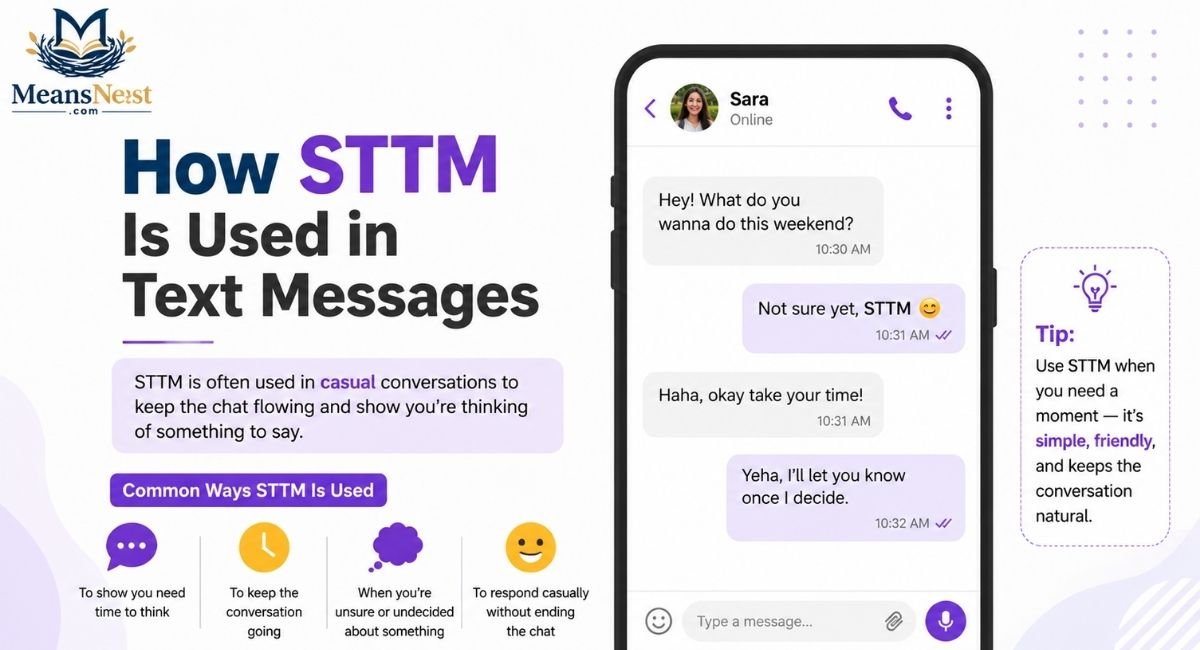
STTM in texting is generally used to end or pause a conversation. Someone may use it because they are annoyed, busy, overwhelmed, or simply tired of the current topic.
You might see STTM in messages, private chats, or a group conversation.
Common situations include:
- Someone keeps sending unwanted messages.
- A friend continues teasing you.
- Two people are arguing.
- Someone wants a temporary break from chatting.
- A friend uses the phrase jokingly.
- A person wants to shut down an annoying topic.
For example:
Person A: “I’m sending you another 20 memes.”
Person B: “STTM 😂”
Here, STTM probably means “Stop Talking To Me,” but the laughing emoji makes the message less serious.
Another example:
Person A: “Can we talk about what happened?”
Person B: “STTM. I don’t want to discuss it.”
This version is much more serious.
The key is the STTM context. The words around the abbreviation, punctuation, emojis, and relationship between the speakers all provide useful context clues.
STTM Meaning Across Social Media Platforms
The STTM social media meaning is generally the same across platforms: “Stop Talking To Me.”
However, the way people use it can change slightly depending on the platform and conversation style.
STTM Snapchat
STTM Snapchat messages may appear in private chats or replies to stories. Friends may use it playfully after teasing each other.
Example:
“You really posted that selfie? STTM 😭”
The emoji suggests playful annoyance rather than a serious request.
STTM TikTok
STTM TikTok usage may appear in comments, DMs, or reactions to videos. TikTok users often combine short abbreviations with dramatic humor.
For example:
“You made me watch the whole thing for THAT? STTM 😂”
See Also: What Does RT Mean in Text? Full Guide to “RT” in Chat
STTM Instagram
STTM Instagram messages can appear in DMs, comments, and story replies. It may be used when someone is joking with a friend or wants to stop an annoying conversation.
STTM WhatsApp
STTM WhatsApp usage is common in casual one-to-one chats and group conversations where people already know each other.
Because WhatsApp abbreviations and other social media abbreviations are informal, the exact meaning should always be judged from the conversation.
| Platform | Possible Use |
| Snapchat | Playful or serious chat response |
| TikTok | Comment, DM, or humorous reaction |
| DM, comment, or story reply | |
| Personal or group conversation |
STTM in Dating and Relationships
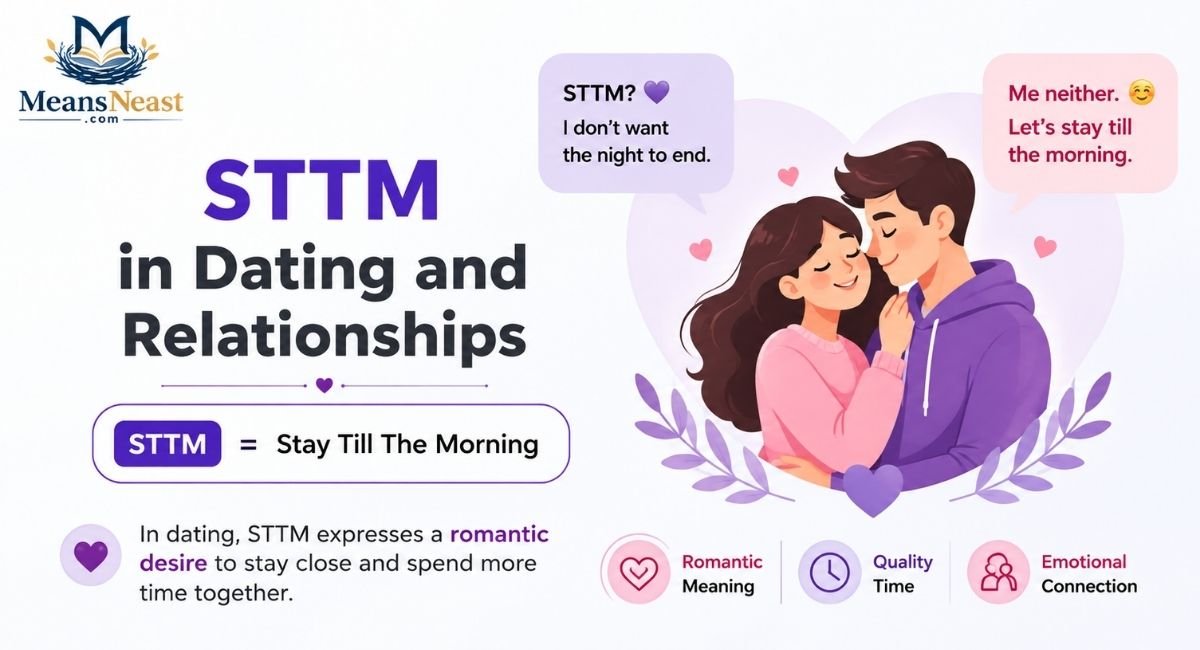
The STTM meaning in relationships depends heavily on the emotional situation.
In dating texts, STTM may be playful flirting, mock annoyance, or a genuine request for space.
For example:
Person A: “You looked amazing today.”
Person B: “STTM, you’re making me blush 😂”
Here, STTM has a playful and slightly flirty meaning. It does not necessarily mean the person wants the conversation to end.
However:
Person A: “Why aren’t you answering me?”
Person B: “STTM. I need some space.”
This is a serious message.
So, the STTM meaning in dating cannot be determined from the abbreviation alone.
Whether STTM comes from a guy or from a girl, the same basic rule applies: look at the surrounding conversation.
There is no universal special STTM romantic meaning based only on the sender’s gender.
In relationship texting, pay attention to:
- Previous messages
- Current mood
- Emojis
- Punctuation
- Whether you were arguing
- How close you are
- Whether the person has asked for space before
If someone clearly asks you to stop communicating, respect that request rather than assuming it is flirting.
STTM Examples in Real Conversations
These STTM examples show how the same abbreviation can communicate different emotions.
1: Serious
Alex: “Can we keep arguing about this?”
Sam: “STTM. I’m too angry to talk right now.”
Here, STTM is a clear request to stop the conversation.
2: Playful
Alex: “I just told everyone your embarrassing story 😂”
Sam: “STTM.” 😭
This is likely joking.
See Also: What Does POS Mean in Text? Meanings, Slang & Examples
3: Annoyed
Alex: “You forgot to send me the file again.”
Sam: “STTM, please.”
The wording suggests frustration.
4: Friendly teasing
Friend 1: “You still listen to that song?”
Friend 2: “STTM 😂”
The abbreviation is being used as exaggerated mock annoyance.
5: Asking for space
Person A: “Do you want to talk about it?”
Person B: “Not right now. STTM for a while.”
Here, the person wants some personal space.
These STTM text examples demonstrate why there is no single emotional interpretation. The STTM intent comes from the whole text conversation, not just the four letters.
STTM Tone and Intent
The STTM tone can range from playful to genuinely hostile.
A useful way to understand it is to examine the message intent.
| Tone | Example | Likely Meaning |
| Playful | “STTM 😂” | Mock annoyance |
| Teasing | “STTM 😭” | Dramatic reaction |
| Annoyed | “STTM, seriously.” | Wants the conversation to stop |
| Serious | “STTM. I need space.” | Genuine request |
| Angry | “STTM.” | Strong desire to end communication |
STTM, meaning “stick to the plan,” is especially important because text does not contain facial expressions or voice tone.
An emoji can soften the message. A period can make it feel more direct. Words such as “please,” “seriously,” or “right now” can also change the implied meaning.
When trying to interpret STTM, ask:
- What was being discussed?
- Was the person joking?
- Were you arguing?
- Did they use an emoji?
- Did they ask for space?
- Is this normal communication style between you?
These clues help explain STTM in different contexts.
STTM in Professional and Formal Communication
Using STTM in the workplace is generally not recommended.
Although STTM professional meaning may still be understood by some people, the abbreviation is strongly associated with casual communication. It can sound rude, dismissive, or unprofessional.
For example, sending:
“STTM. I’m busy.”
to a manager or client could create an unnecessary problem.
Instead, use clear and respectful formal language.
See Also: What Does “FS” Mean in Text? A Complete Guide and Uses
Better options include:
- “Could we continue this discussion later?”
- “I’m currently unavailable.”
- “I need some time before we continue.”
- “Can we discuss this tomorrow?”
- “I’ll get back to you when I’m available.”
In workplace communication, clarity matters more than saving a few characters.
Avoid STTM in:
- Formal emails
- Client messages
- Business proposals
- Job applications
- Official workplace communication
- Professional customer service
Even in professional texting, it is safer to avoid slang and use complete sentences.
The same principle applies to email communication. Formal abbreviations should be used carefully, especially when the recipient may interpret them differently.
Other Meanings of STTM
Although “Stop Talking To Me” is the most common texting interpretation, STTM can represent different phrases in specialized settings.
Acronym databases list multiple non-slang expansions, including terms related to technology, science, business, and other fields.
| Context | Possible STTM Meaning |
| Internet/chat | Stop Talking To Me |
| Finance/business | Short-Term Trading Market |
| Electronics | Scalable Two Transistor Memory |
| Science/technology | Several specialized technical expansions |
| Other fields | Organization- or industry-specific meanings |
This is why other meanings of STTM should not automatically be treated as texting slang.
For example, if STTM appears in a technical document, it may have nothing to do with messaging.
Similarly, a specialized abbreviation could appear in scientific terminology, industry terminology, or technical documentation.
When researching STTM technical meaning, STTM medical meaning, or STTM physics meaning, the surrounding field is essential. A specialized acronym should be interpreted according to the subject being discussed rather than the casual-chat definition.
STTM vs Similar Texting Abbreviations
STTM can sometimes be confused with other short expressions because several texting abbreviations communicate annoyance, disagreement, or a desire to end a conversation.
| Abbreviation | Meaning | Main Difference |
| STTM | Stop Talking To Me | Directly asks someone to stop talking |
| GTFO | Get the F*** Out | Much stronger and more offensive |
| IDC | I Don’t Care | Shows lack of interest |
| IDK | I Don’t Know | Shows uncertainty |
| BRB | Be Right Back | Means temporarily leaving |
| WYD | What are you doing? | Starts or continues conversation |
| NVM | Never mind. | Withdraws a previous point |
These similar texting terms are not interchangeable.
See Also: TMU Meaning in Chat: Uses, Examples & Replies
For example, “IDC” does not necessarily mean the person wants you to stop messaging. It simply says that they do not care about the subject.
Likewise, “BRB” usually means the person intends to return, while STTM can indicate that they want the conversation to stop.
When considering STTM alternatives, choose an expression that matches what you actually want to communicate.
How to Respond When Someone Says STTM
Knowing how to respond to STTM depends on whether the message is serious or playful.
If the person seems genuinely upset, the best response is usually to respect their request.
If They Are Serious
You can say:
“Okay, I understand. I’ll give you some space.”
Or:
“No problem. We can talk later.”
These are appropriate texting responses when someone clearly wants the conversation to stop.
If They Are Joking
If the conversation is clearly playful, you might respond:
“Okay, okay, I’m done. 😂”
Or:
“Fine, I’ll stop… for now. 😭”
These casual responses keep the interaction light.
If You Are Unsure
When the tone is unclear, avoid escalating the situation.
You can say:
“Are you serious, or are you joking?”
This is often better than guessing.
Your STTM response should match the relationship and situation. If someone is angry, a joke may make things worse. If they are obviously teasing, an overly serious response may make the conversation awkward.
The safest appropriate reply is one that respects the person’s apparent intent.
❓ Frequently Asked Questions (FAQs)
What does STTM stand for in data?
STTM can have different meanings in data-related fields, but it is not a universal data abbreviation; its meaning depends on the specific context.
What is SST in slang?
SST does not have one widely accepted slang meaning; its interpretation depends on the conversation or online community.
What does “SST” mean in a chat?
In chat, SST can have different meanings, but it is not as commonly used as abbreviations like STTM or STG.
What does “STTM” mean on Insta?
On Instagram, STTM usually means “Stop Talking To Me,” often used seriously or jokingly depending on the context.
What does “STG” mean in text?
STG usually means “Swear To God,” used to emphasize that someone is being serious or telling the truth.
Conclusion
The STTM meaning in text question has a straightforward answer in most casual chats: STTM means “stop talking to me.” People use this texting abbreviation when they want to end a conversation, express annoyance, ask for space, or jokingly react to a friend’s comment.
However, the tone is not always serious. An emoji, punctuation, relationship, and surrounding messages can turn STTM from a genuine request into playful banter.
The abbreviation can also have specialized meanings outside internet slang. So, when you see STTM in a message, don’t interpret the four letters alone.
Read the conversation around them, consider the person’s tone, and respond according to the situation.

Hi, I’m Kaif Ali, creator of MeansNest. I’m an SEO professional passionate about helping people understand the meanings of words, text slang, and online expressions through clear, accurate, and easy-to-read content. I create SEO-friendly guides that deliver real value while making learning simple for everyone.